
The Problem
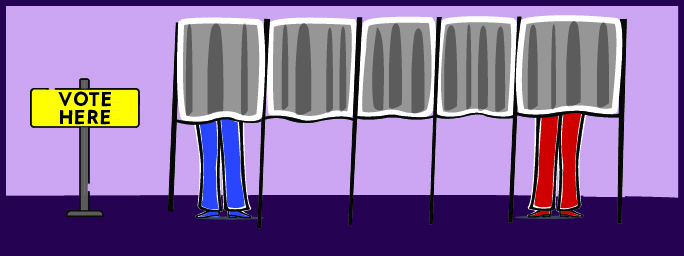
It isn’t at all obvious how this problem with primaries creates our national political dysfunction. Aren’t primaries just qualifying rounds to pick who advances to the deciding general elections? Not anymore.
Gerrymandering Changes Everything
Gerrymandering (redrawing district lines to heavily favor one party or the other) has made primaries all-important in almost all House districts. Gerrymandering is now so widespread that only 10% of House races were considered competitive in 2024. Since gerrymandering virtually guarantees general election outcomes, whoever wins the primary of the favored party is the ultimate winner.
Why is that a problem? The very small numbers of voters who turn out for primaries are not representative of the mainstream. They are the most extreme and uncompromising on both the far right and the far left. Their rigidity is fueled by our now highly siloed media, designed to hook and enrage the most politically active among us. These fringe voters now hold ironclad control of Congress.
Congress is Paralyzed
This state of affairs directly creates crippling political dysfunction in two major ways. First, it paralyzes Congress through hyper partisanship. The goals of the far extremes are incompatible, too far apart for the pragmatic compromise required to pass legislation.
Congress is Not Protecting Democracy
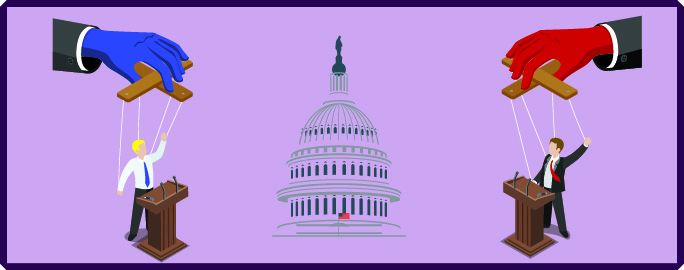
Second, it enables the primaried out tactic, which guts Congress’s power to protect democracy against Executive branch abuses. This tactic relies critically on the extreme profile of these primary voters.
Here’s how it works. If an incumbent doesn’t toe the party line, the party can reliably eliminate that incumbent in the primary. They run another more pliable and extreme candidate with assured appeal to these extreme primary voters. If incumbents get primaried out, they can’t get re-elected. Independent bids in these circumstances rarely, if ever, work if they’re even allowed. Many states have “sore loser” laws that bar losing primary candidates from then running as independents or nominees of another party.
People criticize these hamstrung, muzzled members of Congress as lacking principles, but they’re ignoring basic political reality. Whatever their ideals, incumbents are fundamentally driven to get re-elected. Their careers, livelihoods and identities are on the line. Only those retiring soon can afford to ignore that imperative.
Senator Thom Tillis (R-North Carolina) is the most recent public victim of this tactic. Tillis voted against the One Big Beautiful Bill Act because he believes it will devastate health care in his state. Confronted with being primaried out as a result, Tillis, age 65, opted to not seek re-election.
More often, though, these dynamics are not visible at all to the public. The mere threat of being primaried out is enough to keep most incumbents silently in lockstep with party agendas now dictated by these all-powerful extreme voters.
The Problem
Underlying Dynamics
Two developments have now made primaries all-important: the spread of gerrymandering and the fragmentation of our media as a result of cable and broadband.
Gerrymandering of district maps is now so widespread that only about 10% of House races were considered competitive in 2024. Since gerrymandering all but guarantees general election outcomes, whoever wins the primary of the favored party is the ultimate winner in the House.
The voters who turn out for primaries are a very small slice of the electorate, only about 10% of eligible voters, and they are the most extreme and exceptionally uncompromising on both the right and the left.
These rigid tendencies are fueled by our now highly fragmented media. People can now watch siloed channels that only serve to reinforce their beliefs with emotional content designed to bait, hook and enrage them.
Despite their small numbers and unrepresentative profile, these are now the voters who actually determine who gets elected to Congress. As a result, members of Congress are disproportionately beholden to these fringe voters.
The Consequences
This new reality has serious negative consequences.
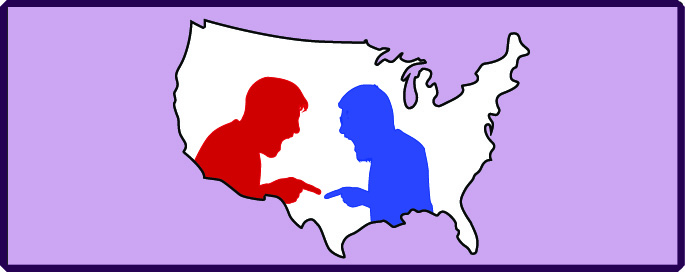
- It creates the hyper partisanship that makes Congress dysfunctional.
- It prevents important initiatives from being legislated despite broad public support.
- It enables the threat of being “primaried out.” If an incumbent steps out of line, that party can reliably eliminate that incumbent in the primary by running another more extreme and pliable candidate with assured appeal to these primary voters. This guts Congress’s will to curb Executive Branch over-reach, one of the critical checks and balances protecting our democracy.
- It makes party agendas increasingly extreme to appeal to the voters who give the parties this power.
Poorly Understood
Few Americans understand how critical primaries have become. Most skip primaries altogether; only 10% of eligible voters turn out for primaries versus 40% – 60% turnout for general elections. Studies say that this is because they believe that the general election is what matters most.